

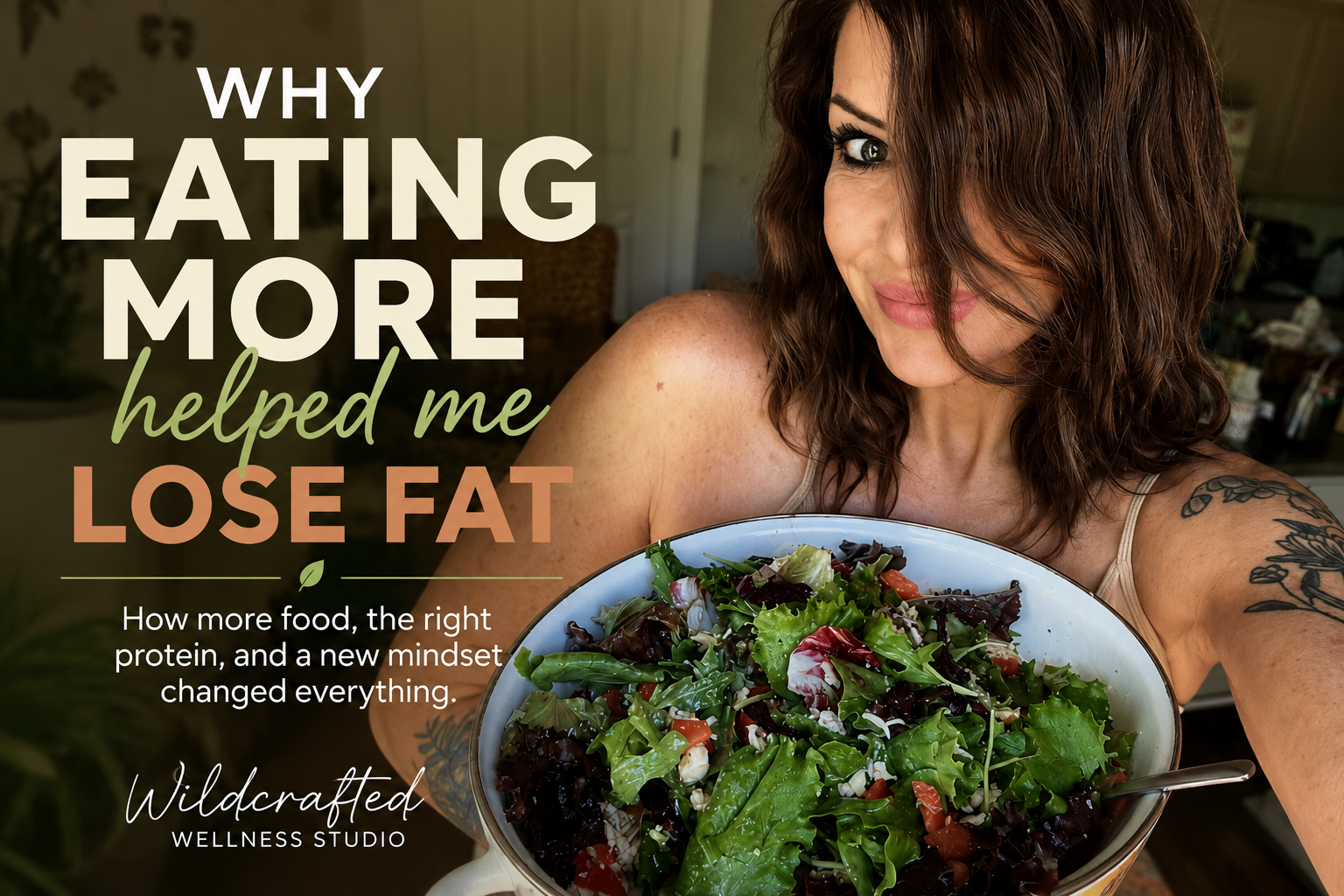
If you grew up in the 80s and 90s like I did, you probably remember the low-fat craze. Everything was “fat free.” SnackWell’s cookies flew off the shelves. Margarine was supposedly healthier than butter. We bought frozen diet meals, rice cakes, and anything with the word “light” on the label. We were taught that hunger was simply part of being healthy. If you were hungry, the diet must be working. I spent way too many years on that roller coaster.
I’d lose weight. I’d gain it back. I’d get frustrated, tighten the reins even more, lose some weight again, then eventually end up right back where I started. The entire approach wasn’t sustainable.
There’s actually a reason fad diets almost always fail. From an evolutionary standpoint, your body wasn’t designed to thrive during long periods of food restriction. For most of human history, food wasn’t guaranteed. When calories become scarce, your brain doesn’t think, “She’s trying to lean out before summer.” It thinks, “Food is becoming scarce. We need to protect her.”
Your hunger increases. Food becomes more rewarding. You think about eating more often. Your body becomes more efficient with the energy it has.
I used to think I was just weak. I thought everyone else had more willpower than I did and that I simply wasn’t strong enough to push through the hunger pains, the lightheadedness, the constant thoughts about food, and the exhaustion that came with dieting. I truly believed it was a character flaw. Every time I “failed” another diet, I’d beat myself up and promise myself I’d try harder next time. There was so much guilt and shame wrapped up in the fact that I couldn’t seem to starve myself or survive on processed, fat-free diet foods. Looking back now, I realize I wasn’t failing because I lacked willpower. I was trying to fight millions of years of human biology, and that’s a battle none of us are meant to win.
Then there’s the psychological side. When we constantly tell ourselves that certain foods are “bad,” that we’re only successful if we’re hungry, or that eating more means we’ve failed, food begins to take over our thoughts. We become trapped in an exhausting cycle of restriction, guilt, overeating, and starting over on Monday. That cycle is mentally exhausting.
Eventually, I reached a point where I thought, “I can’t do this for the rest of my life.” Honestly, I almost decided I’d rather carry a little extra weight than spend another decade obsessing over every bite I ate. Constant restriction wasn’t giving me a healthier life. It was stealing my peace.
So I started asking a different question. Instead of asking, “How little can I eat?” I started asking, “How much can I eat while still reaching my goals?”
I’m 5’9”. It takes a lot of fuel to run this machine. I lift weights four days a week. I spend long hours working as a massage therapist. Some days I’m also outside doing tree work, hauling brush, moving equipment, and working in the Georgia and Florida heat. I’m not willing to spend my days feeling lightheaded, exhausted, irritable, or struggling to remember basic words because I’m trying to convince my body it isn’t hungry. I wanted a way of eating that I could actually live with. That’s when I stopped focusing on eating less and started focusing on eating better.
Protein became my priority. Not because I wanted to look like a bodybuilder, but because I wanted to build a stronger, healthier body. Protein helps repair muscles after exercise. It helps preserve lean muscle while losing body fat. It keeps you feeling full longer, supports recovery, and makes it much easier to stick with healthy eating because you’re no longer fighting hunger every waking minute.
Instead of filling my plate with low-calorie foods that left me hungry an hour later, I started building my meals around lean protein, fruits, vegetables, potatoes, rice, Greek yogurt, cottage cheese, eggs, and other whole foods that actually fuel my body. Ironically, I’m eating more food than I used to. Not more junk food. More real food.
I don’t binge or restrict anymore. I consistently eat anywhere from about 2,000 to 2,400 calories a day, and I’m able to do that while staying pretty lean as long as my protein is high and I’m staying active and exercising. I used to try to survive on 1,200 calories a day, which means I was missing out on an additional 1,200 calories my body actually needed. My body looks and feels so much better now. I can confidently say you can eat way more food than you think you can. You just have to be intentional about your protein and the quality of your food.
I don’t spend nearly as much time thinking about food anymore. When your body is getting enough protein and enough calories to support your activity level, those overwhelming urges to eat everything in sight often become much quieter. I didn’t suddenly developed incredible willpower. I finally started giving my body the calories and nutrition that it needed.
Today, I still have goals. I want to build muscle. I want to lose body fat. I want to stay strong as I get older. But I’m no longer chasing the smallest number on the scale. In fact, I weigh in the mornings now in hopes that my scale number doesn’t move because I know that if that number stays the same but my measurements go down, that’s just beautiful strong muscle that I’m putting on. I’m chasing strength. I’m chasing energy. I’m chasing consistency. I’m chasing habits that I can still be practicing ten years from now.
Switch your thoughts from, “How little can I eat?” to, “How well can I nourish the body I’m trying to build?”
If you’re struggling to figure out your protein needs, your calorie goals, or how to fuel your body without feeling deprived, I’d love to help. Whether you need guidance with your nutrition, your workouts, or just someone to encourage you along the way, I’m here. The path to becoming healthier isn’t necessarily eating less. It’s finally learning how to eat enough of the right things that fuel your body.