

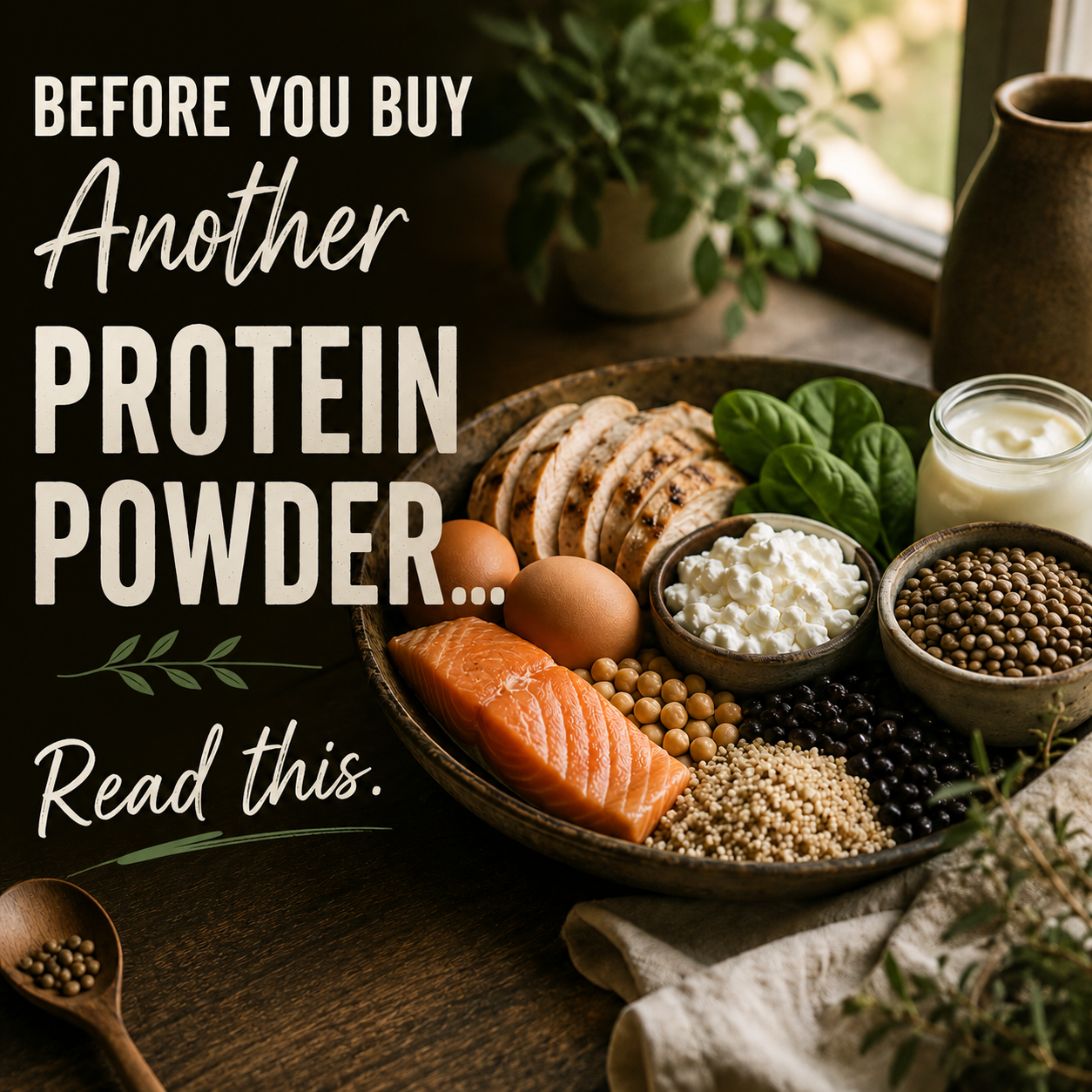
People often ask me what protein powder I recommend. My answer usually surprises them.
Most of the time, I don’t.
If I were only a massage therapist, I’d probably spend all day talking about tight muscles, posture, and movement. If I were only an herbalist, I’d probably spend my time talking about plants, inflammation, digestion, foraging and the incredible ways nature supports healing. If I were only interested in bodybuilding and nutrition, I’d probably focus on protein totals, training volume, and progressive overload.
But I’m not just one of those things. I approach the body from a whole-health perspective. Everything affects everything else. Your muscles don’t exist apart from your digestive system. Your digestion doesn’t exist apart from your nervous system. Your hormones influence recovery. Your sleep influences muscle growth. Your stress changes the way your body heals. That’s why I almost always recommend getting your protein from whole foods before reaching for a supplement.
Can you build muscle with a protein shake?Of course you can. But that’s not the question I ask. The question I ask is, “What choice nourishes the entire body?”
This is something nutrition scientists call the food matrix. Food isn’t simply a collection of isolated nutrients. It’s a complex package of proteins, fats, carbohydrates, vitamins, minerals, fiber, antioxidants, and thousands of naturally occurring compounds that interact with one another. Researchers are still discovering how these compounds work together, but one thing has become increasingly clear… our bodies often respond differently to nutrients consumed as whole foods than they do to those same nutrients consumed in isolation.
Think of it like this. A symphony isn’t just violins. It’s violins, cellos, trumpets, percussion, timing, acoustics, and the conductor. Take one instrument out and play it by itself and it’s still music, but it’s not the same experience.
Whole foods work much the same way. In other words, you aren’t just eating protein. You’re eating information that your body has evolved to recognize.
A cup of Greek yogurt doesn’t just provide protein. It also provides calcium, potassium, beneficial bacteria in many varieties, and a food matrix your body recognizes. Eggs bring choline, healthy fats, vitamins, and highly bioavailable protein. Lean chicken, turkey, fish, cottage cheese, beans, and other minimally processed foods give your body far more than isolated protein ever can.
When I recommend whole foods, I’m not just trying to help someone reach a protein goal. I’m trying to help them build meals that provide magnesium for muscle contraction, potassium for fluid balance, calcium for bone health, iron for oxygen delivery, zinc for immune function, omega-3 fats for inflammation, choline for brain health, and fiber to nourish the trillions of bacteria living in the gut. Those things matter just as much as the protein itself.
Many protein powders, on the other hand, are highly processed. Some contain gums, artificial sweeteners, fillers, sugar alcohols, and long ingredient lists that can cause digestive discomfort for some people. While they certainly have a place, I don’t believe they should become the foundation of someone’s nutrition.
There is also something psychologically satisfying about sitting down to a plate of grilled chicken, roasted potatoes, and vegetables. Whole foods generally require more chewing, take longer to eat, and often keep us fuller for longer. A shake can absolutely be convenient, but convenience doesn’t always equal satisfaction.
And it’s worth thinking about something else too. A lot of the people you see recommending specific protein powders or bars are doing so because they’re being paid, sponsored, or earning a commission. That doesn’t automatically make the product bad, but it does shape the conversation. I’m not in the business of selling you a product. I’m in the business of helping your body heal and function the way it was designed to.
One of the most common things I hear is, “I just can’t eat that much protein.” I understand. Protein takes effort. It requires planning. Sometimes it means choosing cottage cheese instead of chips, Greek yogurt instead of dessert, or grilled chicken instead of grabbing something convenient. Whole foods aren’t always the easiest option. But easy isn’t always the goal. Health is.
When I recommend nutrition, I’m not simply asking, “Will this help build muscle?” I’m asking, “Will this help support your muscles, your gut, your hormones, your immune system, your energy, and your long-term health?” Those are very different questions.
Protein supplements absolutely have their place. There are seasons when a protein shake is convenient after a workout, during travel, or when life gets busy. I don’t believe they’re inherently bad. I simply believe they should remain what they were intended to be. A supplement. Not the foundation of your nutrition.
We live in a culture that loves shortcuts. We isolate nutrients, package them in colorful tubs, and convince ourselves health can be scooped into a shaker bottle. But your body wasn’t built on isolated nutrients. It was built to recognize food.