Wildcrafted Wellness Protein Cheesecake
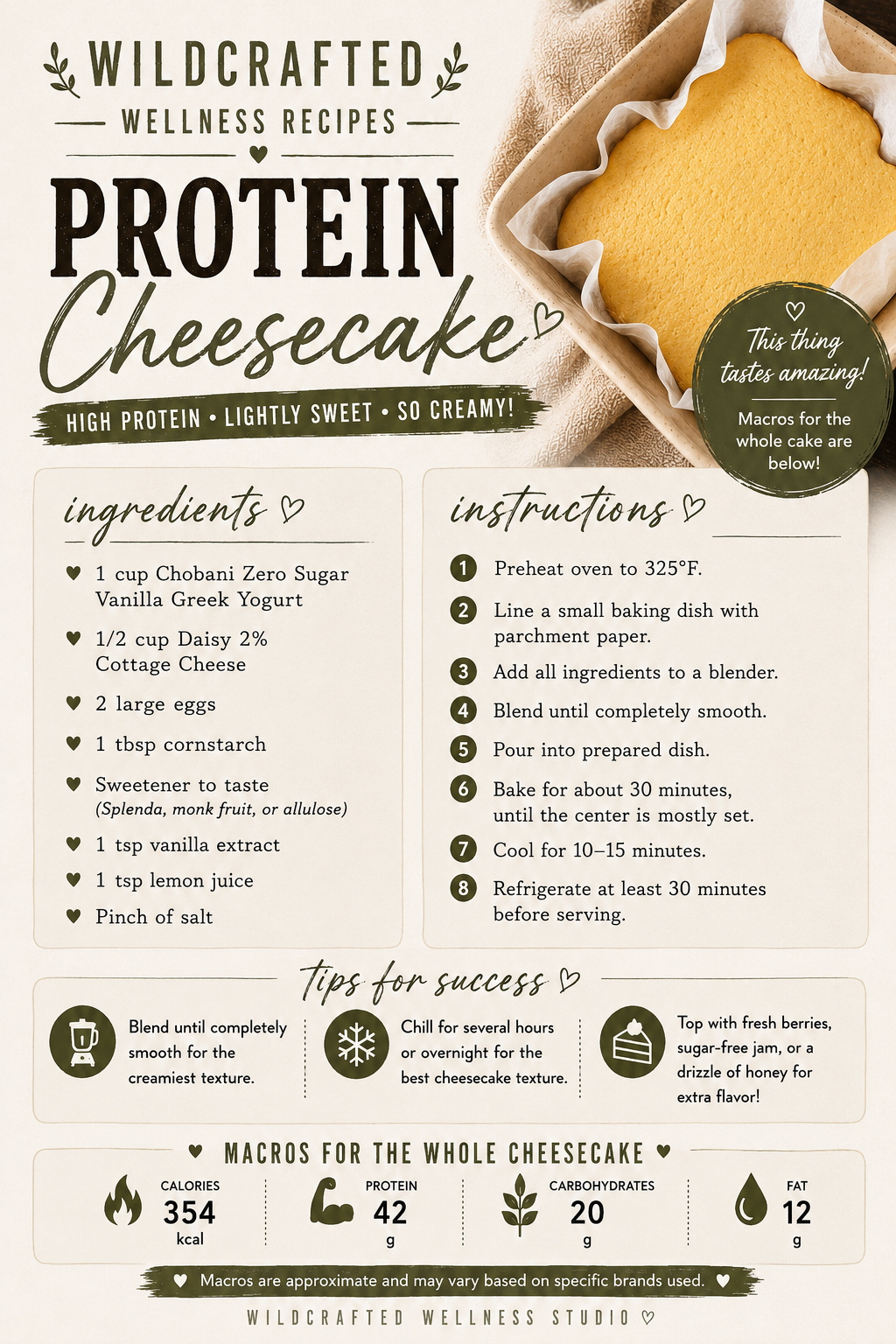
I just started a body recomp, and if you’ve ever done one, you know the beginning can be rough when it comes to sweets. 😅
One thing I’ve learned about myself is that I do much better when I find healthier versions of foods I actually enjoy rather than trying to white-knuckle my way through cravings. So lately I’ve been experimenting with a lot of recipes, tweaking them, changing ingredients, and making them over and over until I get something I genuinely love.
This cheesecake is a very modified version of a recipe I originally saw online, and honestly, it’s the closest I’ve gotten to an actual cheesecake texture and flavor while still keeping the calories and protein where I want them.
A couple of notes before you make it: Sweeten it to YOUR taste. I like things pretty sweet, so I use more sweetener than some people would.
Let it chill in the refrigerator. Seriously. It tastes good right out of the oven, but after several hours in the fridge it develops that true cheesecake texture.
I use Splenda. I know it’s not the most natural option, but I live a pretty moderate lifestyle and don’t mind using a little here and there. Some of the alternative sweeteners can be a bit aggressive on my digestive system, and I personally don’t love the taste of monk fruit. Use whatever works best for you.
Wildcrafted Wellness Protein Cheesecake
Ingredients
• 1 cup Chobani Zero Sugar Vanilla Greek Yogurt • ½ cup Daisy 2% Cottage Cheese • 2 large eggs • 1 tablespoon cornstarch • Sweetener to taste • 1 teaspoon vanilla extract • 1 teaspoon lemon juice • Pinch of salt
Instructions
1. Preheat oven to 325°F.
2. Line a small baking dish or loaf pan with parchment paper.
3. Add all ingredients to a blender.
4. Blend until completely smooth.
5. Pour into prepared dish.
6. Bake for about 30 minutes, or until the center is mostly set.
7. Cool for 10–15 minutes.
8. Refrigerate for at least 30 minutes, although several hours or overnight is even better.
Macros for the entire cheesecake:
354 Calories 42g Protein 20g Carbs 12g Fat
If you make it, let me know what you think. I’m pretty sure this one is stay. ♥️
Mullein: soft leaves, strong medicine
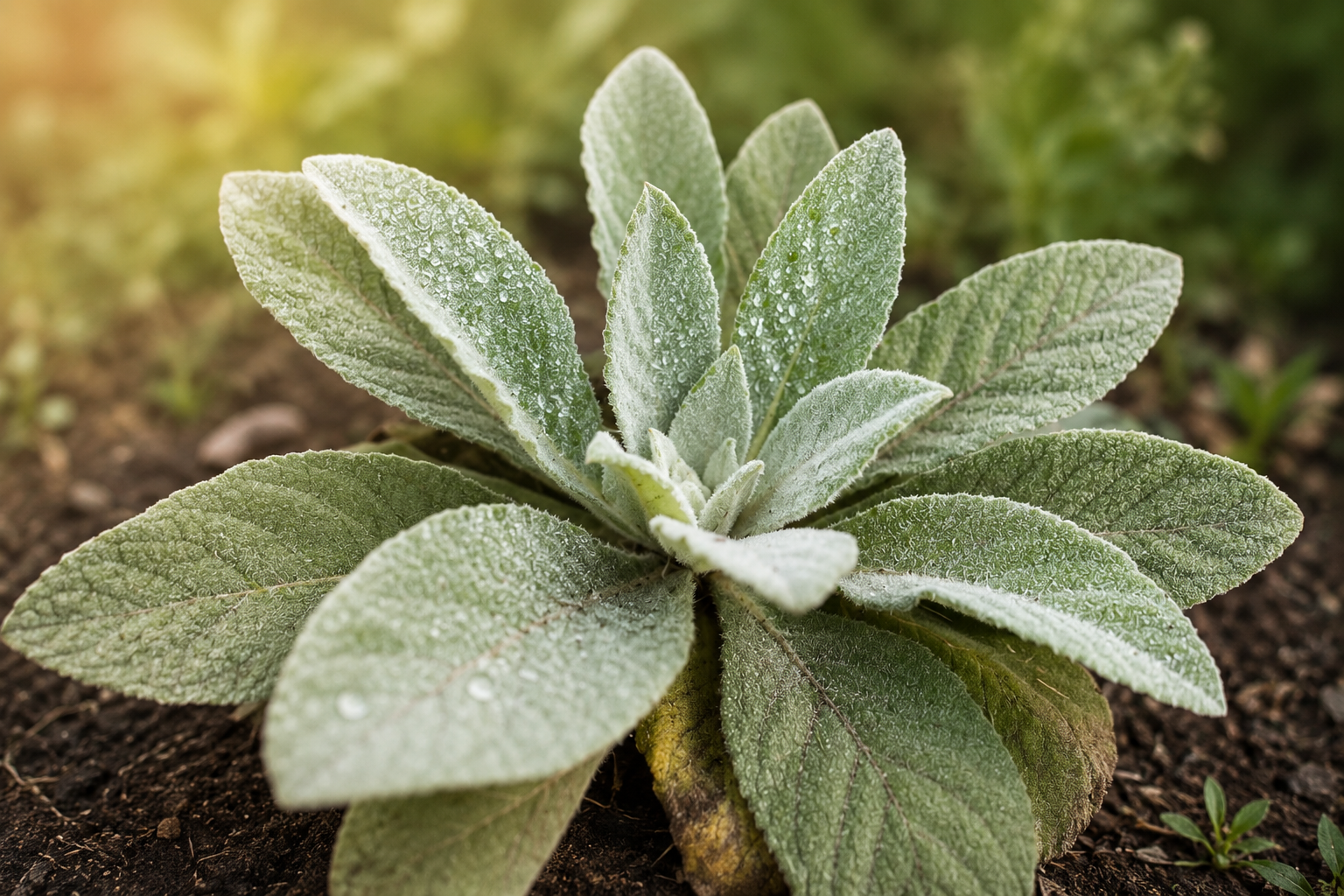
Mullein (Vebascum thapsus)
This is a picture that I took of my mullein growing in my backyard.
Mullein is one of the first plants that I fell in love with and one of the first plants that I learned about when foraging. It’s really easy to identify which makes it a great one to start with if you’re just beginning to forage. Mullein grows on roadsides and field edges. First year mullein grows in a soft rosette close to the earth and in its second year it sends up a tall stalk covered in bright yellow blooms. It’s important to forage only mullein that you know hasn’t been exposed to pesticides and chemicals so make sure you know where you forage. If you’re harvesting your own mullein, pick leaves from the first year whenever possible. They’re generally softer and less fibrous. Both stages of growth have their gifts so both are beneficial…first year for leaves, and second year for flowers. Mullein has these beautiful velvety leaves that are impossible to miss. Growing up in the country, you very quickly learn that mullein is the outdoorsman’s toilet paper.
Mullein embodies so much of what I love about plant medicine. It’s gentle, accessible, supportive, and incredibly useful. In herbal medicine we talk about plants that push the body and plants that support the body. Mullein falls into the support category.
Traditionally, mullein has been used and known for it’s respiratory benefits. The leaves are mucilagenic which helps to calm down irritated tissues. It’s a great expectorant which means that it can help loosen excess mucus from the lungs. I use it most often during times of congestion, but it’s a great addition for daily use if you’re a daily smoker.
Energetically, there’s something really special about a plant that supports the breath. In herbal traditions the lungs are often associated with grief, sadness, and things we haven’t fully released, so mullein tea is a great addition to any healing or breathwork exercises.
Every part of the mullein plant has been used traditionally. The leaves are the most commonly used part of the plant but I periodically will use the flowers to make an ear oil. The leaves have these tiny little hairs on them that can act as an irritant so it’s important to strain your tea after it’s finished brewing. Fresh or dried leaves can be added to steam inhalations, or mixed into herbal smoking blends.
Mullein is not a fussy little garden plant that needs perfect soil and constant attention. It honestly seems to grow best in places where other plants tend to struggle. If you dig up a mullein plant and plant it in your yard, there’s a good chance that it will return year after year with very little effort. My little mullein plant has become a faithful companion with no effort on my part.
Over the years, I’ve used mullein in many different preparations but my favorite is a simple respiratory syrup. It’s one of those recipes that I come back to over and over again during cold and flu season. If you’d like to try it yourself here is my recipe.
Ingredients:
1 cup dried mullein leaf
1 TBSP dried marshmallow root
1 TBSP dried thyme
1 TBSP dried fenugreek
3 Cups cold water
Directions:
Add the mullein, marshmallow root, thyme, and fenugreek to a small saucepan.
Pour in the water and bring it to a gentle simmer.
Reduce heat and simmer uncovered until the liquid has reduced by about half, leaving 1.5 cups.
Remove from heat and allow to cool slightly.
Strain carefully through a fine mesh strainer, coffee filter, or cheesecloth to remove the tiny mullein hairs.
Stir in the honey while the liquid is still warm but not hot.
Store in a glass jar in the refrigerator.
Let me know if you make it and how much you love it!