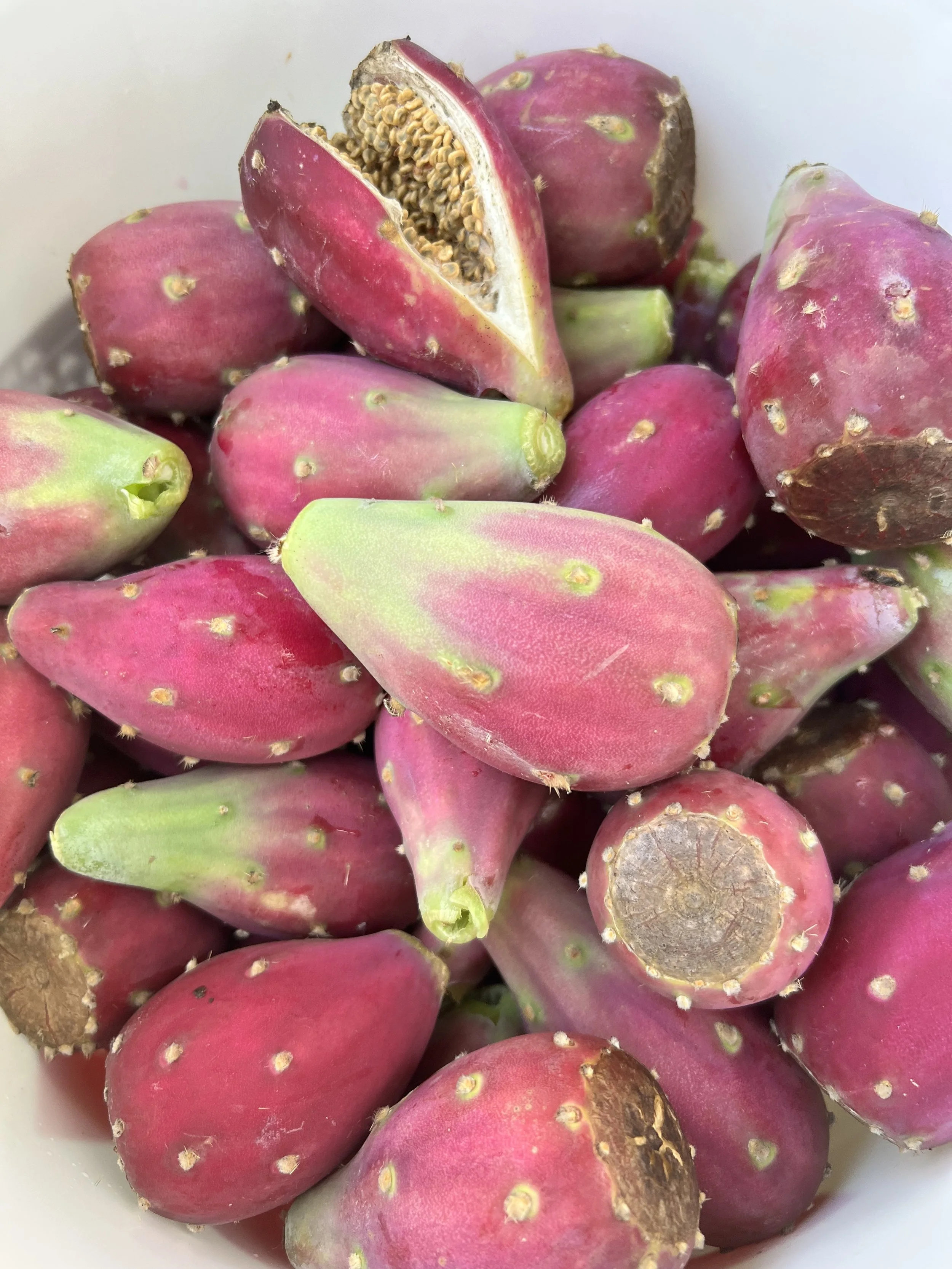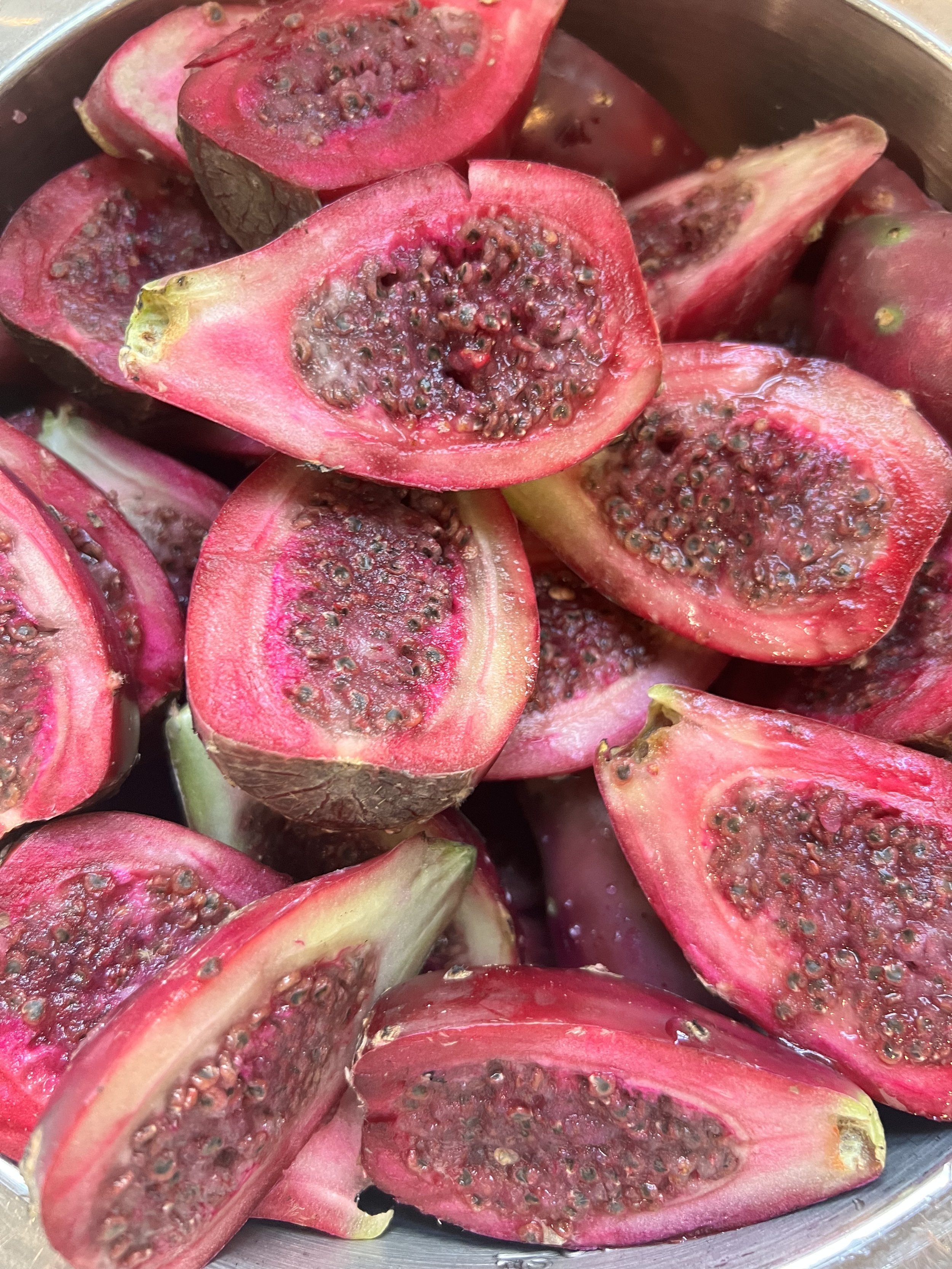

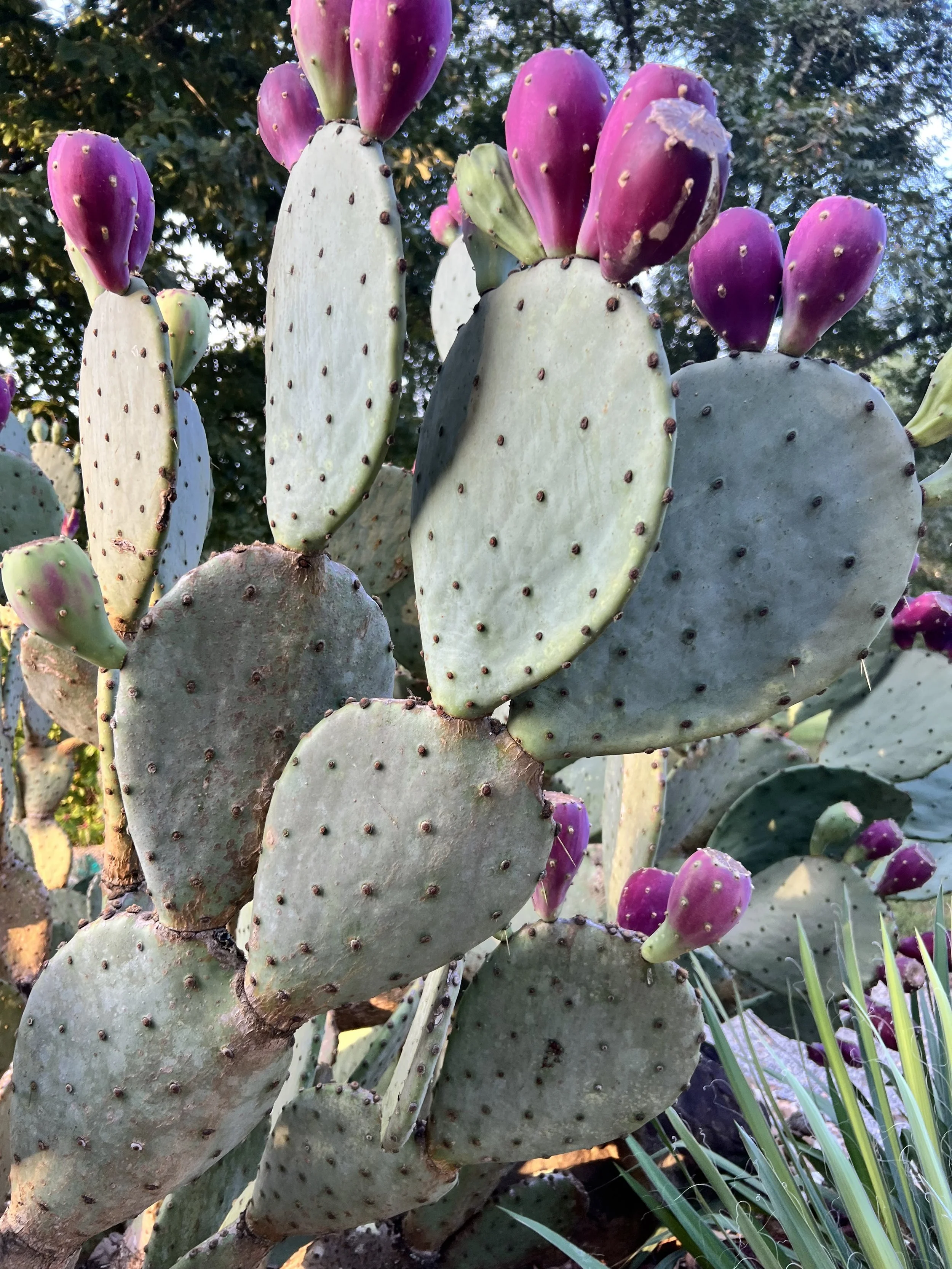
A few days ago I harvested almost an entire five-gallon bucket of prickly pear fruit, so of course once I got it all home I started figuring out everything I could do with it. Prickly pear is the fruit of the Opuntia cactus, and if you’ve never opened one up, the color inside is incredible. Some are more orange or reddish, but the ones I collected made this really bright pinkish-purple juice. Prickly pear has been used as food for a very long time, especially in Mexico and throughout the Americas, but the fruit also has some interesting nutritional and medicinal properties. It contains vitamin C, fiber, minerals, flavonoids, phenolic compounds, carotenoids, and betalains, which are the pigments responsible for those really bright colors. Betalains are antioxidants, so they help protect our cells from oxidative stress. There has also been research on Opuntia for things like inflammation, cholesterol, blood sugar, and metabolic health. I do want to clarify something here because you’ll see all kinds of claims about prickly pear lowering blood sugar. Some of the better research on blood glucose has actually been done on the cactus pads, or nopales, and not necessarily the fruit. So I wouldn’t look at a jar of prickly pear jelly as medicine for diabetes, especially once we’ve added six cups of sugar to it, but the fruit itself absolutely has some interesting plant compounds and nutritional benefits.
If you decide to harvest prickly pear, though, you need to know about the glochids before you touch one. Those are the tiny little hairlike spines on the outside of the fruit, and I can tell you from experience that you do not want them in your hands. They’re so tiny that sometimes you can feel them but can’t even see where they are. I use tongs to pick the fruit and then burn the glochids off before I start processing it. I still wash everything really well afterward and handle it carefully because those little things can hang around. Once I had mine cleaned, I scooped out the part with the seeds, rinsed everything really well, and ran the fruit through my juicer. What came out was this really thick, bright magenta juice. Prickly pear naturally has quite a bit of mucilage, so if you process some and think, why in the world is my juice so gelatinous, you haven’t done anything wrong. That’s just part of the plant. I strained mine again through a very fine berry strainer to make sure I wasn’t carrying any little pieces of glochids or seeds into what I was making.
Once you get to that point, there is actually a lot you can do with the fruit. You can eat it fresh once it has been properly cleaned and peeled, or use the juice for jelly, syrup, drinks, sauces, sorbet, fruit leather, baked goods, cocktails, mocktails, and probably a hundred other things I haven’t tried yet. I’ve been making jelly and syrup with mine, and I’m already thinking about prickly pear cobbler jelly because apparently having five gallons of cactus fruit means I now need to see how many things I can turn pink. The flavor itself is fairly mild and sweet, so it works really well with other flavors too. Lemon or lime makes sense with it, and I think there are probably some really interesting combinations with other wild fruits and herbs that I want to play around with.
Something else that came up while I was processing all of this was the difference between using a plant as food and calling something “medicine.” I don’t think we have to make every plant into a cure for something in order for it to be useful. Prickly pear fruit contains antioxidants and other plant compounds that are beneficial to us, and that’s enough. We can eat plants because they nourish us. We can also learn about how they were traditionally used and then look at what modern research is finding about those same plants. Sometimes the traditional use and the science line up really well, and sometimes the research is still catching up or tells us something a little different. That’s part of herbalism too. I don’t want to tell somebody that prickly pear cures inflammation or lowers their blood sugar just because a website says it does. I’d rather understand which part of the plant was used, how it was prepared, what we actually have evidence for, and then decide what that information means.
So now I have a kitchen full of prickly pear jelly and syrup, more ideas than I have prickly pears, and probably a few glochids still hiding somewhere in my hands. If you have prickly pear growing near you, it’s definitely a fruit worth learning about, just take some tongs with you. Make sure you positively identify anything you forage, know that you’re harvesting from a place where you have permission, avoid areas that may have been sprayed or contaminated, and learn how to safely remove the glochids before you eat or process the fruit. I’m going to keep experimenting with this batch because I’m pretty sure I’m nowhere near finished figuring out what I can make with it.